I’m reminded of a conversation I had once with one of my Hispanic students. We were talking about the different ways in which we can learn a new language, especially while living in the country where only that language, for the most part, is spoken. His language-learning challenges are typical of what the majority of Hispanic students face in school on a daily basis. Unlike native speakers, Hispanic students must understand both the social language spoken in the typical American high school hallway, and the academic language that is principal mode of instruction in the classroom. The two paths shouldn’t, but sometimes do, cross. If your living for any length of time in a different country, you’ll need to learn the language as quickly as possible. As a tourists visiting the U.S. or Mexico, I need only learn enough to get by. Of course, I’ll never improve because I’m avoiding any situation that requires me to put sentences together and speak them aloud. But I understand it’s a little risky to initiate a conversation in Spanish or English if you don’t have any confidence in your language skills. Fortunately, when I was teaching, there were many teachers who took the extra time to encourage Hispanic students to be successful and reaffirm that they have the ability to learn.
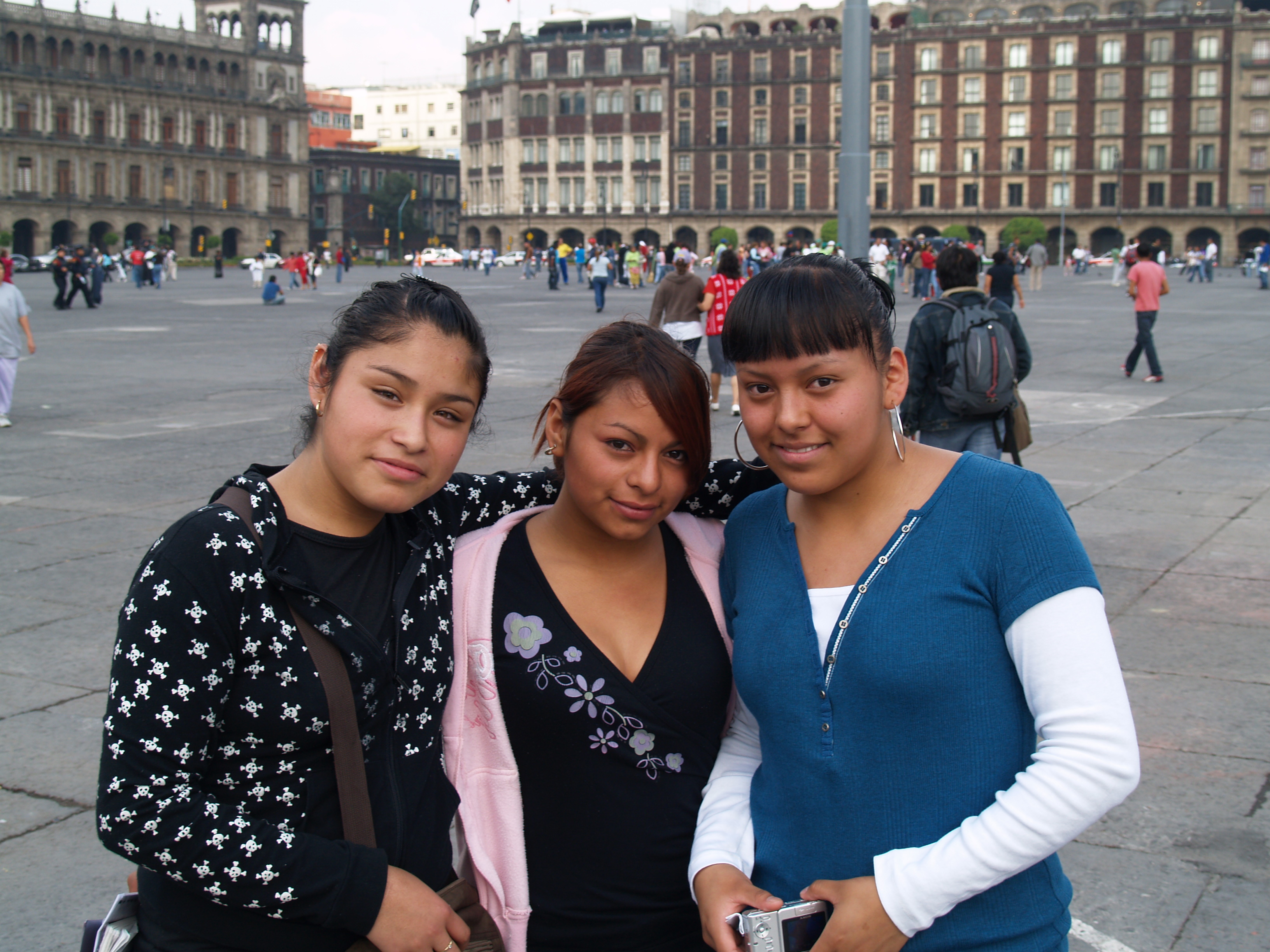
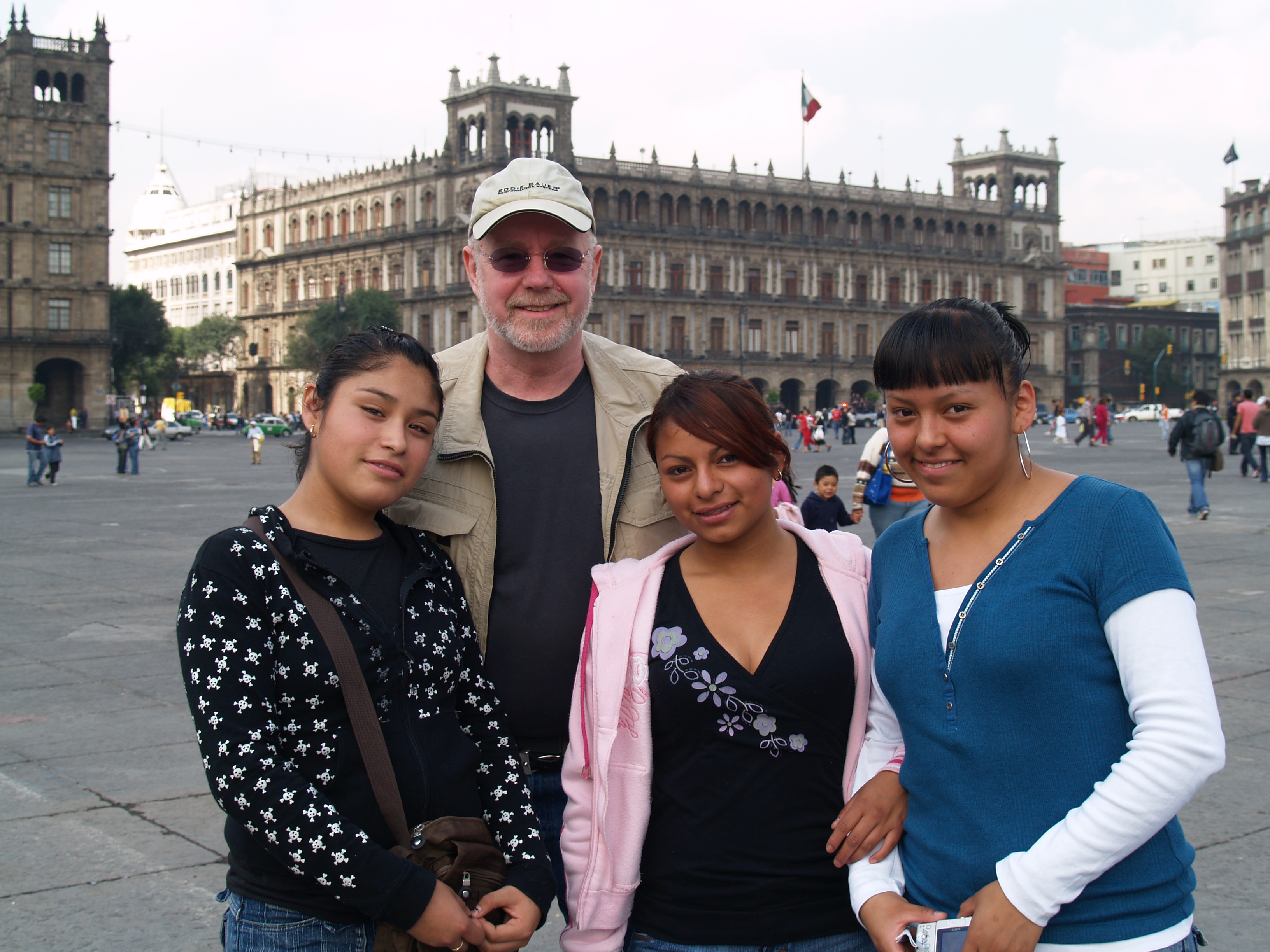
Jackie and I were strolling through the Zocalo in Mexico City one summer morning in 2008. We were in front of the Catedral Metropolitana, when three teenage girls came up to us and asked if we would speak English with them as part of a school assignment. (I can hear it now: find two Gringo tourists in the square and practice your English with them). How apropos. They each had a little script and asked us questions: “What is your favorite food?” “What kind of music do you like?” and so on. They recorded our responses. I tried a little of my Spanish with them, but they just giggled. Very sweet girls. Jackie took a picture of us.
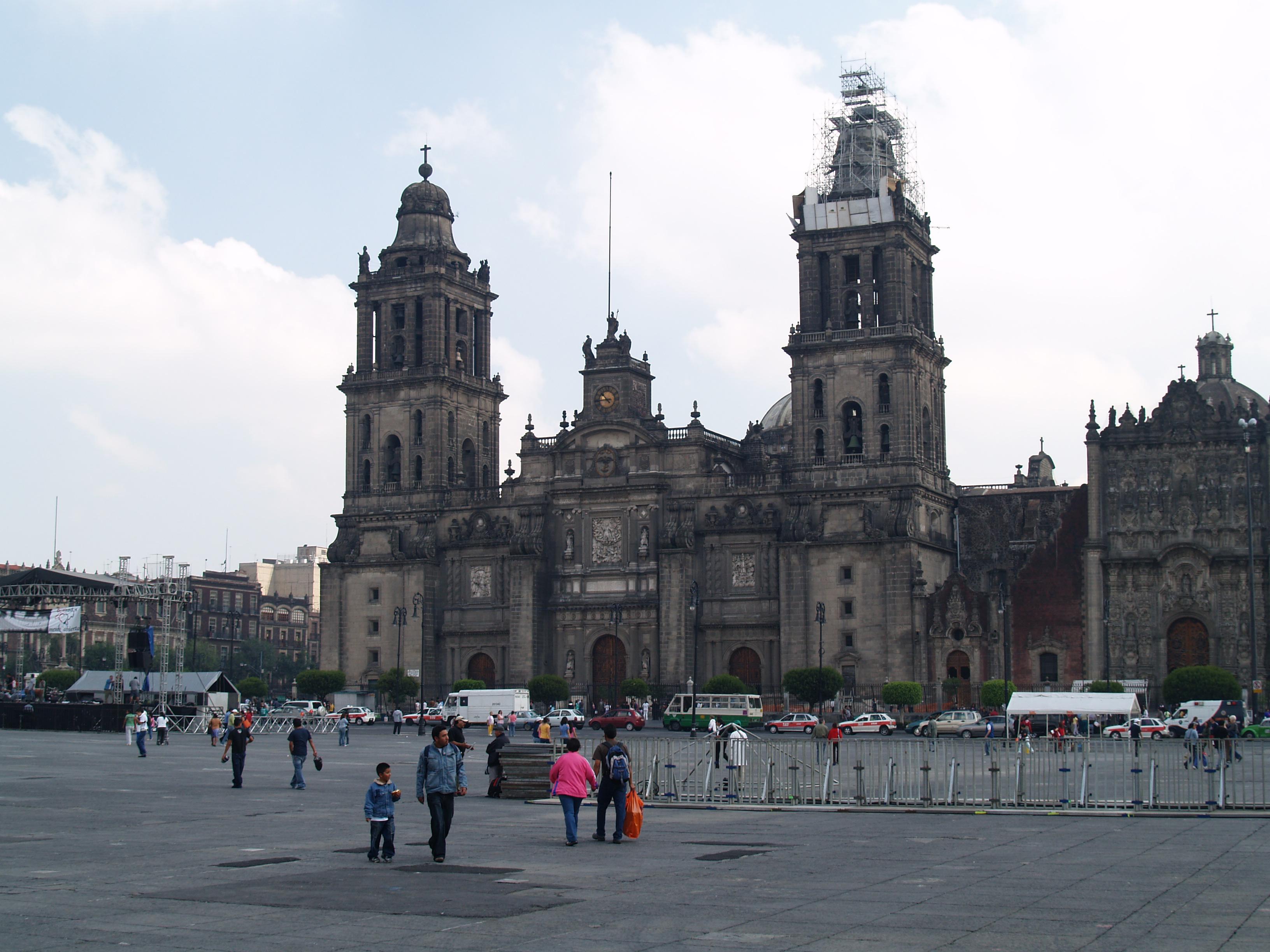
The grand Catedral, a very beautiful structure, dominates the Zocolo from every angle of the square. Up close, the exterior reflects an assortment of architectural styles and influences. Inside, rows of columns support four identical domes. The five naves and fourteen chapels were mostly designed by the Spanish architect José Churriguera, who died in 1725. Like most Mexican churches I’ve visited, the cathedral is full of religious paintings, altarpieces, and statues, much of it from the colonial period, reflecting a variety of artistic styles.
Inside, the magnificent Altar de los Reyes and the Altar del Perdón, created by Jerónimo de Balbas in 1737, overwhelm the senses. It’s hard to think that all this gold without thinking about the Mexican braceros who dug it up in the mines and hauled it to the surface on their backs.
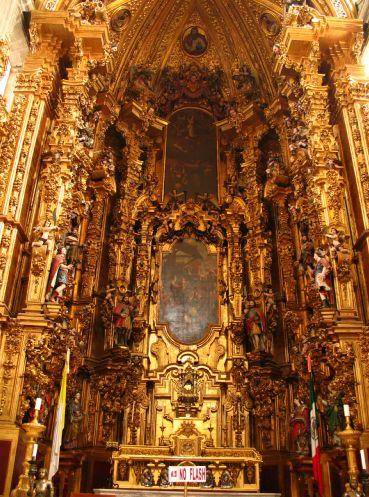
Altar de los Reyes, 1737
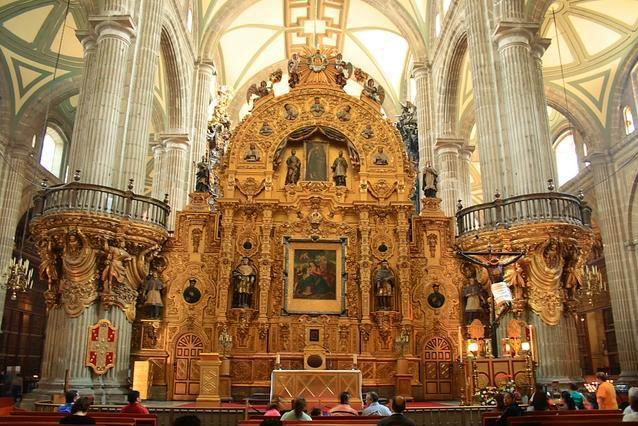
El Altar del Perdón
In front of the cathedral Indians in Concha dancer costumes dance for tips and sell a variety of crystals, gemstones, skulls, dried alligators, and herbs and incense, especially sticks of rock-hard sage. All are believed to provide some sort of special protection from various afflictions. Sage is burned in the square, its smoke encircling visitors to the square wishing for its healing benefits.

 Call and Response
Leave a comment