
Because jazz was such an integral part of the Civil-Rights Movement—not to restrict jazz’s historical influence on the musical articulation of racism and oppression in American history—it’s not unreasonable to wonder what Martin Luther King. Jr. thought about jazz. Reprinted below is an essay where he reflects on the legacy of jazz. For a long time his words were mistakenly attributed to a public speech he allegedly gave at the 1964 Berlin Jazz Festival. Not so. It would have been a landmark event had he spoken publicly about jazz and its contributions to the Civil-Rights Movement. But according to research conducted by David Demsey, a William Paterson University (North Haledon, New Jersey) professor of music and coordinator of jazz studies, and master’s degree alumnus and jazz drummer Bruce Jackson, King never spoke in person at the festival. He did, however,
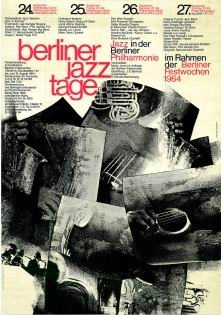
1964 Berlin Jazz Festival Poster
provide at the invitation of the Berlin Festival organizers his written thoughts on jazz which were included in the the festival’s program. The research appeared in the January 2011 issue of DownBeat magazine.
On the Significance and Beauty of Jazz
God has wrought many things out of oppression. He has endowed his creatures with the capacity to create and from this capacity has flowed the sweet songs of sorrow and joy that have allowed man to cope with his environment and many different situations.
Jazz speaks for life. The Blues tell the story of life’s difficulties, and if you think for moment, you will realize that they take the hardest realities of life and put them into music, only to come out with some new hope or sense of triumph.
Modern Jazz has continued in this tradition, singing the songs of a more complicated urban existence. When life itself offers no order and meaning, the musician creates an order and meaning from the sounds of the earth which flow through his instrument.
It is no wonder that so much of the search for identity among American Negroes was championed by Jazz musicians. Long before the modern essayists and scholars wrote of racial identity as a problem for a multiracial world, musicians were returning to their roots to affirm that which was stirring within their souls.
Much of the power of our Freedom Movement in the United States has come from the music. It has strengthened us with its sweet rhythms when courage began to fail. It has calmed us with its rich harmonies when spirits were down.
And now, Jazz is exported to the world. For in a particular struggle of the Negro in America, there is something akin to the universal struggle of modern man. Everybody has the Blues. Everybody longs for meaning. Everybody needs to clap hands and be happy. Everybody longs for faith. In music, especially this broad category called Jazz, there is a stepping stone towards all these.
Every year around Martin Luther King, Jr.’s birthday, I try to plan some sort of civil-rights-jazz tribute show. Last year I did the show on January 14, 2014, the day before MLK’s actual (as opposed to his celebrated) birthday. It turned out to be a good show. I mixed clips of MLK’s voice, talking about the importance of jazz in the civil-rights movement in with jazz selections on the theme of race in American, civil-rights, and Afro-American history through jazz. I got a really good response, especially from a woman in Ocean Park.
This year the President’s State of the Union Address fell on the very day of my show, during the same time slot, so the best I could do was to pick out a few of the selections I had planned for the night originally. Here’s the very brief playlist for that night, January 20, 2015:
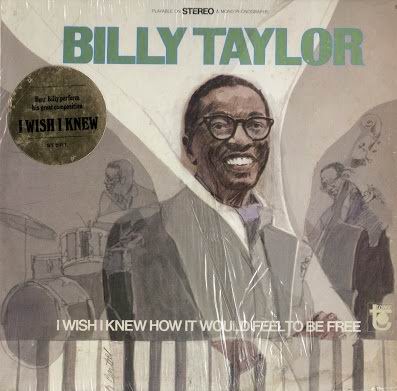 —Billy Taylor. “I Wish I Knew How It Would Feel to Be Free.” Composed by Billy Taylor. I Wish I Knew How It Would Feel to Be Free. 1967. Tower Records. Taylor on piano with Ben Tucker on bass and the great Grady Tate on drums. This was a big hit in 1968 for vocalist Solomon Burke. The best known version of this song is Nina Simone’s 1967 recording from her Silk & Soul album, which I played last year. The song quickly gained notoriety as an anthem of the civil-rights movement in the 60’s. There have been many notable cover versions throughout the years.
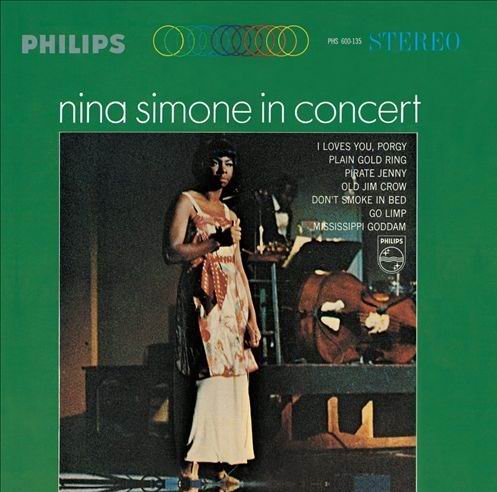 —Nina Simone. “Mississippi Goddam.” Source unknown. Written by Nina Simone probably in 1964 and originally released on her album Nina Simone in Concert at Carnegie Hall. This is the most common live performance, the one found on countless Nina Simone compilations, and it runs almost five minutes. The selection I describe here and the one I played is not from this album. The one I played runs almost seven minutes and has commentary which mentions the recent death of Martin Luther King, Jr. and the murder of the four little girls at the Birmingham, Alabama, church bombing. It’s worth noting that this song also became an anthem of the movement, especially after she sang it in front of 40,000 at the end of one of the Selma to Montgomery marches.
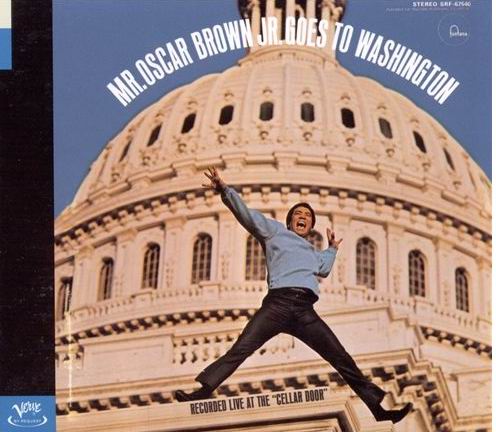
—Oscar Brown, Jr. “Forty Acres and a Mule.” Mr. Oscar Brown, Jr. Goes to Washington. Written by Oscar Brown, Jr. Fontana Records, 1965. Album was recorded live at the Cellar Door in Washington D.C. and is accompanied by pianist Floyd Morris, guitarist Phil Upchurch, bassist Herbert Brown and drummer Curtis Boyd. The lyrics are clearly ironic, playing on the idea of false promises and false hope, especially during the period of this performance. This is one of the first LP’s I bought when I was a freshman at Monterey Peninsula College in Monterey, California, in the fall of 1966. I wouldn’t have bought it at all if it hadn’t been for my close friend Jerry Griffo who would sing the lyrics to Brown’s “Brother, Where Are You?” This is a truly great album, one I still own today after all these years.
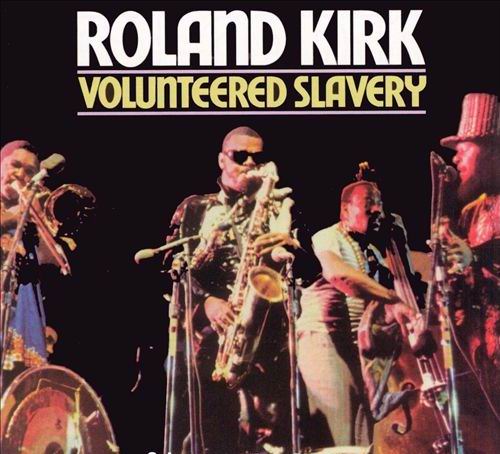 —Rahsaan Roland Kirk. “Volunteered Slavery.” Title cut from his 1969 album Volunteered Slavery on Collectables. Kirk on several instruments with his band that included Charles McGhee on trumpet, Dick Griffin on trombone, organist Mickey Tucker, bassist Vernon Martin, drummers Jimmy Hopps and Charles Grady, as well as Sony Brown. The title cut is a “call and response” vocal, mocking (Mingus style ala “Original Faubus Fables”?) in tone and cutting in sound.
 Call and Response
Leave a comment