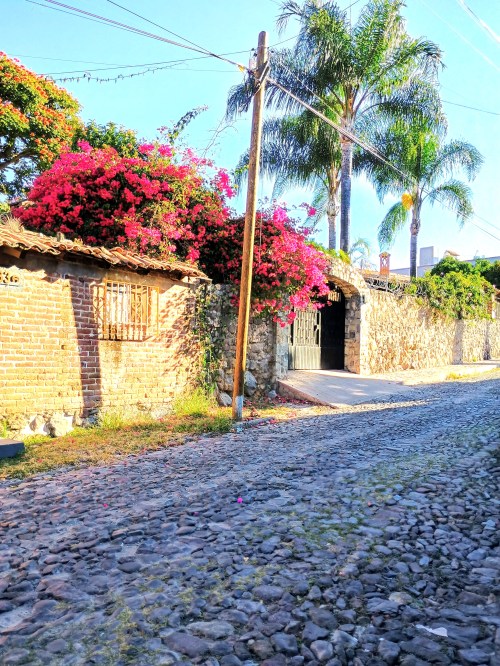
Typical Ajijic cobblestone street on Calle Hidalgo outside Casa Cale. Note tire trails. Over a period of time, the cobblestone “crowns” become worn smooth. Photo by author.
Cobblestone streets are ubiquitous in Mexico, charming but treacherous. They’ve been a source of anxiety for me ever since I took a bad fall exactly five years ago, on December 24, 2019. It happened in San Miguel de Allende, on the steep
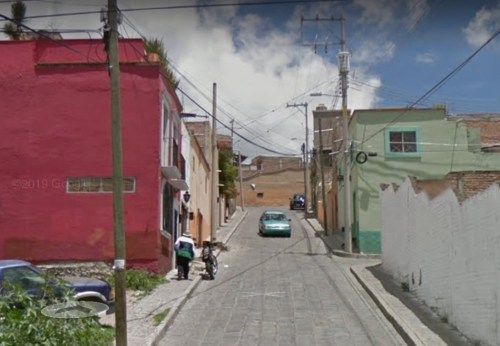
Calle Purisma, the site of my fall. Google streetview.
corner of Calle Purísima and Río Nilo. Distracted by the colonial architecture and not watching my step, I caught the toe of my shoe on a jagged cobblestone. In an instant, I lost my balance, tumbled forward, and landed hard on my side. The result: a serious fracture to my right wrist—a painful reminder of the risks these picturesque streets can pose.
Since that fall, cobblestones have become something of a nemesis to me. Despite their undeniable romantic allure and historical significance, I harbor a lingering, if slightly irrational, fear of them. Yet, I can’t deny their rustic charm—the way they reflect centuries of wear and tell stories of a place’s past. Still, whether it’s my age, a shaky sense of balance, or just plain clumsiness, the truth remains that cobblestones and I have been at odds ever since.
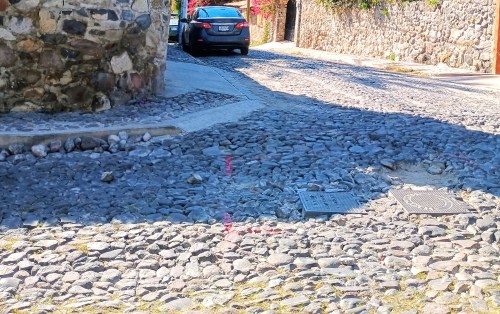
Particularly “good” example of cobblestones with CFE access convienently located in the middle of the street. This is the corner of Hidalgo and Moreno. Photo by author.
For many, the mere mention of cobblestones conjures up nostalgic visions of quaint pueblos mágicos—the kind of romantic scenes that grace travel brochures, Facebook posts, and Instagram feeds. And I understand why. It’s easy to wax poetic about their old-world charm, especially when strolling through a picturesque pueblo like Ajijic. But for me, they’re not quaint or charming. They’re just hazardous obstacles standing between me and a pleasant, injury-free stroll.
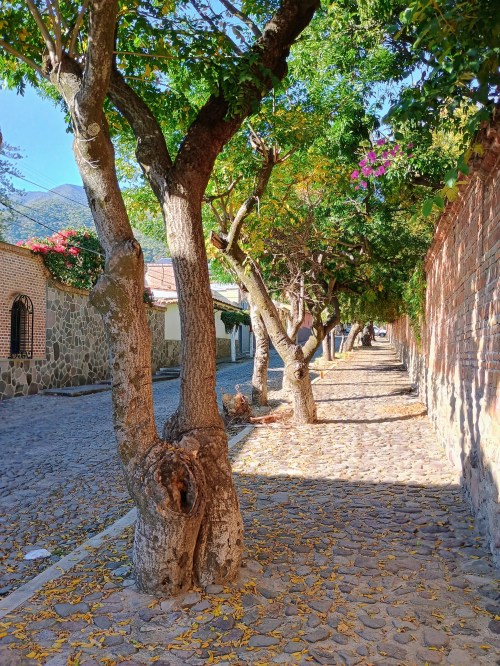
This particular street,—Pedro Moreno between Calle Ocampo and Independencia—is unique for its cobbled sidewalks that run parallel to the cobblestone street. Photo by author.
Yet, there’s another side to the cobblestone streets of Ajijic. These uneven pathways connect us to the village’s rich history, each stone bearing silent witness to centuries of vibrant life. Navigating them demands humility and attentiveness, almost as if the streets are testing my patience and resolve. They seem to whisper a reminder: “Camina despacio. No te apresures. Es mejor disfrutar el moment”—Slow down. Don’t rush. Savor the moment. Ignore that advice at your peril, though. Cobblestones can be merciless, jolting your ankles—or wrists, as I know all too well—with their sharp, unyielding edges. And yet, they possess a mischievous charm, compelling you to dance around their imperfections in what I like to call El Baile de las Empedradas—the cobblestone dance. For me, though, it feels more like El Baile de los Toros—the dance of the bulls (apologies to Georges Bizet).
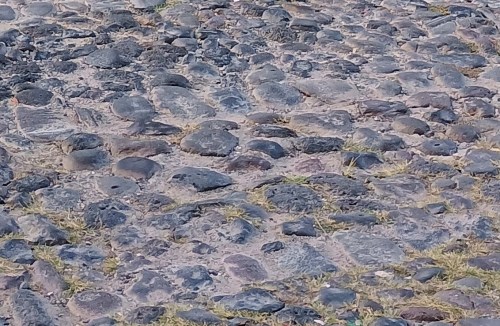
Close up of Calle Guadalupe Victoria, replete with jagged and broken cobblestones and huge gaps between. The locals have no problem navigating these monsters! Photo by author
Whether you’re a gringo or a local, cobblestones couldn’t care less. Even now, I hear them cry out, No me importa. ¡Que vengan todos! “Let them all come!” The cobblestone streets of Ajijic regard their travelers with equal parts indifference and challenge, like ancient philosophers testing humanity’s resilience.
Of course, I see young people navigate the cobblestone streets of Ajijic with a blend of confidence and carelessness, their bodies nimble enough to quickly adapt to the cobblestones’ whims. They hop, sidestep, and occasionally stumble, laughing off the missteps as though the cobbles are teasing them, testing their agility. Some, especially the locals, seem to glide effortlessly, their movements fluid as though they’ve danced this uneven rhythm all their lives. Others—perhaps newcomers or tourists—stride with exaggerated caution, their sneakers betraying their inexperience as they awkwardly navigate the ancient stones.
Then there’s an old Mexican woman, wrapped in the familiarity of her rebozo, who moves with a quiet grace born of years spent traversing the cobblestoned streets of Ajijic. Her sturdy sandals and well-practiced gait transform the cobbles into a part of her daily rhythm. She steps with learned precision, placing her feet in exactly the right spots, her eyes scanning the ground without hesitation, as though she knows each stone by name. Perhaps she does. There’s a sense of unity between her and the streets, an unspoken agreement shaped over decades.
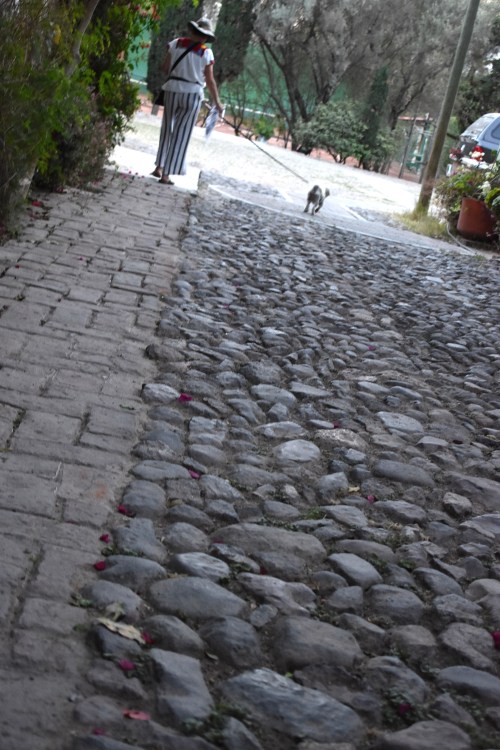
Jackie and Luiz making their way cautiously toward the Plaza Principal in Ajijic. Photo by author.
In contrast, an old Gringa woman might approach the cobblestones with an air of trepidation, her wide-brimmed hat shading eyes that dart from stone to stone. She grips her purse or walking stick tightly, her unfamiliarity with the street’s quirks making every step a tentative negotiation. A conspiracy among cobblestones? Yet, there’s something endearing about her determination, though—perhaps even an admiration for the cobbles’ obstinate charm. Where the old Mexican woman walks with an innate confidence, the Gringa moves with a mixture of suspicion and wonder, her steps a little clumsier, but no less determined.
And so, while the cobblestones remain undefeated, cunning adversaries, I’ve learned to move a little slower, tread a little more carefully, and laugh at my own lack of grace. Perhaps one day, I’ll master El Baile de las Empedradas—or at least make peace with it. Until then, I’ll keep dancing on, one graceless step at a time, and hope the cobblestones will learn to respect me as much as I have learned to respect them.
Afterword:
A few thoughts about why cobblestones are such a prominent feature in many Mexican pueblos, such as San Miguel de Allende and Ajijic, where I live:
Historical Legacy: Cobblestone streets are deeply rooted in colonial-era infrastructure. Spanish settlers brought the tradition of cobbled roads to Mexico, and many towns have preserved these streets as a nod to their colonial heritage.
Aesthetic Appeal: Cobblestone streets enhance the charm and authenticity of Mexican pueblos, making them attractive to tourists and residents alike. They contribute to the rustic, picturesque atmosphere that places like San Miguel de Allende and Ajijic are known for.
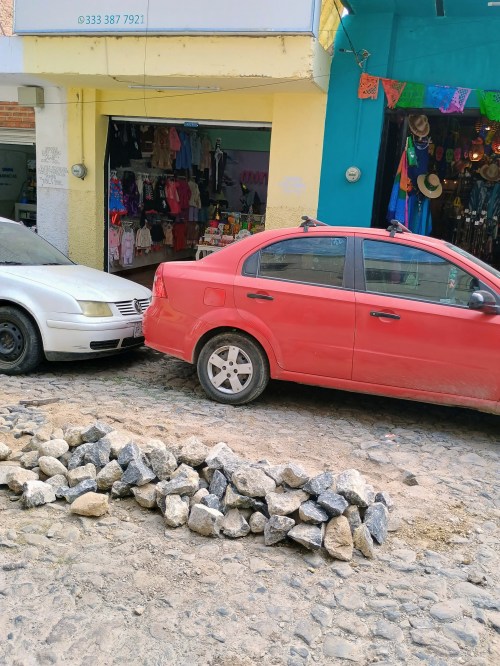
There are times when the cobbles can no longer withstand the constant pressure of traffic and they finally collapse, creating holes in the street. No worries. There is always an adequate supply and they can easily be stored in the middle of the street. Cars will naturally just drive around them. Photo by author.
Durability: Cobblestones are remarkably durable and can withstand heavy rains and wear over time. Unlike tarmac, which can develop potholes or degrade in extreme weather, cobblestones are relatively low-maintenance once laid.
Drainage: Cobblestones naturally allow for better water drainage between the gaps, which can help reduce flooding during Mexico’s rainy season. In Ajijic, water tends to collect in neighborhoods that do not have cobbled streets.
Cost and Availability: Historically, cobblestones were made from locally sourced stones, making them a cost-effective solution in areas where such materials were abundant. While modern paving options are now widely available, many towns stick with cobblestones to maintain their traditional look.
Preservation of Culture: Many Mexican towns, especially those designated as pueblos mágicos (magical towns), aim to preserve their cultural identity. Maintaining cobblestone streets aligns with this goal, as replacing them with modern materials could detract from their historic and cultural authenticity.
 Call and Response