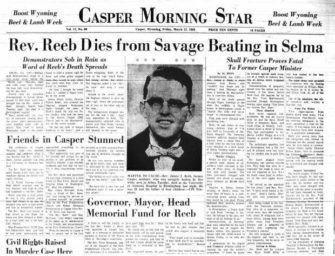
A long-time friend of mine recently sent me a quotation from a speech Martin Luther King Jr. gave eulogizing the death and murder of Rev. James Reeb on March 11, 1965. He was curious about King’s use of the word funeralized as a verb in the speech. Why did King chose to use this particular verb form in his eulogy? Why not simply funeral? Here is a portion of that speech:
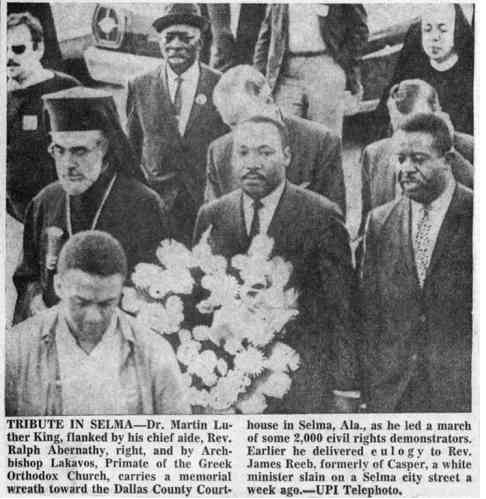 “Naturally, we are compelled to ask the question, Who killed James Reeb? The answer is simple and rather limited when we think of the who. He was murdered by a few sick, demented, and misguided men who have the strange notion that you express dissent through murder. There is another haunting, poignant, desperate question we are forced to ask this afternoon, that I asked a few days ago as we funeralized James Jackson. It is the question, What killed James Reeb? When we move from the who to the what, the blame is wide and the responsibility grows”. (“Martin Luther King, Jr.’s Eulogy for the Reverend James Reeb”)
First of all, in terms of the grammar, it is no mystery that practically any noun can be “verbed” by adding the suffix -ize, -ify, or –ate to it, as in the case of funeral to funeralized. The question is for what reason and to what effect did King chose to use this form of the word, especially if this verbed form may not be understood or accepted by everyone who listens or reads his speech?
King, a master orator (and I would argue master poet), likely used the word in his eulogy intentionally to replace the more generic “buried” or “laid to rest” to emphasize the particularly solemn occasion of both James Jackson and James Reeb’s funerals. Further, King most likely used funeralized to underscore his message that this funeral was more than just a another ceremony to dispose of a body. Instead, King intended the gathering to become a symbol signifying the broader social problems that face American society. His hope is that in his death
James Reeb says something to each of us, black and white alike—says that we must substitute courage for caution, says to us that we must be concerned not merely about who murdered him but about the system, the way of life, the philosophy which produced the murder.
King understood that his speeches during the Civil Right’s movement in the 60’s required subtlety in the use of language rather than inflammatory rhetoric. He recognized that using inflammatory or divisive language could inflame tensions between blacks and whites and undermine his message. King was careful to use language that was not only powerful and emotive, but also measured and inclusive. King’s mastery of language allowed him to use the power of poetic language necessary to convey the importance civil rights to his congregation while at the same time avoiding inciting aggressive and violent reactions from white people.
It could be argued that the use of funeralized is a kind of “coded language.” Black Americans have a long history of using coded language as a means of subverting oppressive power structures and communicating with each other in ways that were not easily understood by white people in positions of authority.
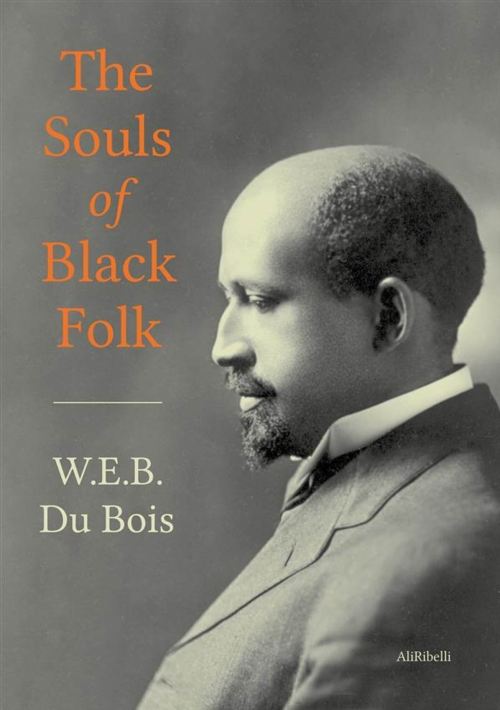 W.E.B. Du Bois in his book The Souls of Black Folk, 1903, used the term “double consciousness” to describe the experience of living with two conflicting identities as a Black person in a white-dominated society. Consequently, the use of coded language to safely communicate was necessary as a means of survival and resistance.
During the era of slavery, for example, enslaved people often used song, dance, and other forms of cultural expression to communicate with each other without their masters knowing. Spirituals, for example, often contained coded messages about escaping to freedom, with lyrics that used biblical stories and metaphors to convey hidden meanings.
Similarly, during the Jim Crow era and beyond, Black Americans continued to use coded language as a means of resisting racial discrimination and oppression. This could take the form of using euphemisms or non-standard English to avoid drawing attention to themselves, or using slang and other forms of coded language to communicate with each other about sensitive topics without being overheard by white people.
King’s use of funeralized may very well be an example of this.
The following quotations highlight the ways in which have used language strategies to navigate and survive in a society that has historically sought to silence or marginalize black voices and experiences:
“Black people had to speak in code, whether it was through spirituals or blues, because that was the only way we could communicate. We weren’t allowed to speak in our own language, so we created our own way of communicating with each other.” – Ruby Dee, actress and activist
“Slave narratives, slave songs, spirituals, blues, and jazz all bear witness to a profound cultural resistance to the totalizing and dehumanizing power of slavery and racism. They signal an important resource for the survival and renewal of African American culture.” – Houston A. Baker Jr., “Blues, Ideology, and Afro-American Literature”
“The Negro has had long centuries of slavery and subjection to learn the arts of concealment and dissimulation. It is not a pleasant thing to feel oneself so completely a part of a despised class and to know that even the slightest slip of the tongue, the simplest mistake in table manners, or the least display of emotion may be interpreted as confirming preconceived notions of one’s inferiority.” – Zora Neale Hurston, “How It Feels to Be Colored Me”
“Black people have had to create our own languages, our own rhythms, our own mythologies, precisely because we were excluded from the dominant culture’s languages, rhythms, and mythologies. Our creativity was a response to the necessity of our survival.” – Angela Davis, “Blues Legacies and Black Feminism”
Martin Luther King’s oratory prowess, in my view, never overtly relied on coded language to achieve his goals of ending racial segregation. He recognized that using inflammatory or divisive language could inflame tensions and undermine his message, so he was careful to use language that was powerful and emotive, but also measured and inclusive, characterizing his non-violent approach to action.
 Call and Response