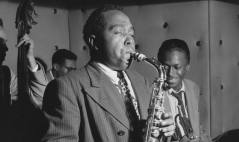
 Since March 12 marked the 92nd birthday of beat generation icon Jack Kerouac, I knew I had to program a Jazz show that spun Kerouac readings with 50’s jazz beboppers Charlie Parker, Dizzy Gillespie, Bud Powell, Mingus, and others. That “beat-bop” era was arts-rich in other areas too: revolutionary freedom of speech, civil rights comedy of Lenny Bruce; the crazed-hipster satires of Lord Bucklely (it’s worthy to note here that his use of hipster language proves the antithesis of the idea that hipster jargon is creatively shallow), the uber-cool hipster-infused social narratives of Babs Gonzales, and jazz-backed readings from Kenneth Patchen, Micael McClure, and Alan Ginsberg.
Kerouac’s hipster paean to the “hot pursuit of pleasure,” his famous, culture-changing novel On the Road, became the back-pocket Bible of just about every highway thumb-wagging beatnik and hippy I ever came across. Even now, almost sixty years after the novel was first published, young people are still fascinated by Kerouac, his book, the beat generation, and his archetypal story of the journey to self-discovery. They were (and still are) the thron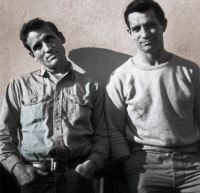 gs of young, somehow disaffected kids, from different cultures and of different races, who rejected their parents’ mainstream, middle-class pursuit of the American Dream. The Way of the Beat was an alternative, counter-culture way of looking at the world, a “Way” devoid of “…the sickness of mass consumerism and pop culture conformity,” and a genuine belief in the activism of ideas, codified in On the Road. And what are these ways?
- the belief that all experience is good and that life is the archetypal hero’s journey
- a cool, almost Zen-like, disaffected demeanor (defined by sun glasses at night)
- a devout interest in all things Zen and Buddhism
- a shared understanding of the language of beat
- a reverence for the working class, the poor
- a hip intellectualism defined by apocalyptic poetry, jazz, Bop, Zen Buddhism, and drugs
The first time I ever saw a copy of On the Road was on my father’s books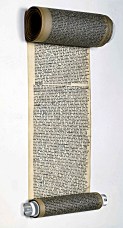 helf, probably sitting next to his copy of Lenny Bruce’s How to Talk Dirty and Influence People. When I first read it in 1965, I thought the book was difficult and annoying to read. It didn’t follow any type of narrative I had ever read before, and the prose seemed erratic to me and out of control. Moments of inspired and energetic writing inevitably gave way to the vast passages of flat and rambling description. But, of course, that is the consequence of Kerouac’s writing process. The writing itself, the actual act of composing the work, laying type to paper (note Kerouac legend of a not-stop alcohol-, marijuana-, Benzedrine-fueled night of writing Road on a single roll of teletype paper fed into his typewriter), is intended to reflect Kerouac’s way of perceiving and understanding his world.
Despite the novel’s flaws, I see a great deal to admire about Kerouac’s book, especially the descriptive passages about jazz with its references to specific jazz musicians. They have a shameless enthusiasm and energy that draws me immediately into Kerouac’s jazz moment. It’s a Zen-like, spiritual thing for him, listening to jazz, drawing inspiration from the sound of improvisation. Kerouac particularly admired Charlie Parker; his name is referenced more than once throughout the novel.
Read Full Post »

 Call and Response
Kerouac and Jazz Prt. 1
Posted in Authors, Jazz, Language, Social Commentary, Writing, tagged beat generation, Bird, Charlie Parker, Jack Kerouac, Jazz, jazz writers, jazz writing, music, On the Road on March 23, 2014| Leave a Comment »
Kerouac’s hipster paean to the “hot pursuit of pleasure,” his famous, culture-changing novel On the Road, became the back-pocket Bible of just about every highway thumb-wagging beatnik and hippy I ever came across. Even now, almost sixty years after the novel was first published, young people are still fascinated by Kerouac, his book, the beat generation, and his archetypal story of the journey to self-discovery. They were (and still are) the thron gs of young, somehow disaffected kids, from different cultures and of different races, who rejected their parents’ mainstream, middle-class pursuit of the American Dream. The Way of the Beat was an alternative, counter-culture way of looking at the world, a “Way” devoid of “…the sickness of mass consumerism and pop culture conformity,” and a genuine belief in the activism of ideas, codified in On the Road. And what are these ways?
The first time I ever saw a copy of On the Road was on my father’s books helf, probably sitting next to his copy of Lenny Bruce’s How to Talk Dirty and Influence People. When I first read it in 1965, I thought the book was difficult and annoying to read. It didn’t follow any type of narrative I had ever read before, and the prose seemed erratic to me and out of control. Moments of inspired and energetic writing inevitably gave way to the vast passages of flat and rambling description. But, of course, that is the consequence of Kerouac’s writing process. The writing itself, the actual act of composing the work, laying type to paper (note Kerouac legend of a not-stop alcohol-, marijuana-, Benzedrine-fueled night of writing Road on a single roll of teletype paper fed into his typewriter), is intended to reflect Kerouac’s way of perceiving and understanding his world.
Despite the novel’s flaws, I see a great deal to admire about Kerouac’s book, especially the descriptive passages about jazz with its references to specific jazz musicians. They have a shameless enthusiasm and energy that draws me immediately into Kerouac’s jazz moment. It’s a Zen-like, spiritual thing for him, listening to jazz, drawing inspiration from the sound of improvisation. Kerouac particularly admired Charlie Parker; his name is referenced more than once throughout the novel.
Read Full Post »