
Who deserves the Jazz Awards at the Grammys is, inevitably, a topic for debate among most jazz critics. Some expect the jazz stalwarts to be recognized; some the young talent; almost all are disappointed in one way or another.
However, this year’s 2016 Grammy awards should please the majority of jazz critics and fans. This year’s awards represent a respectable cross-section of veterans, young lions, and up-and-comers. For my jazz show tonight (All That Jazz, on KMUN, Astoria, Oregon, coastradio.org, 6-8 pm, pacific), I’ll play examples of the music from all of the so-called jazz category winners.
There were some blatantly overlooked nominees, i.e. Phil Woods’ final recording with his brilliant quintet, Live at the Deer Head Inn, 2015, on Deer Head Records (see the last entry on this page) and Bill Frisell’s brand new record When You Wish Upon a Star on Okeh records, released in January of this year, probably too late for consideration, which is too bad because the record is a tour-de-force in jazz guitar. There were, of course, others as well. However, for those who did earn a Grammy, their recognition was well-deserved.
Here are some highlights of Tuesday night’s show. The playlist follows.
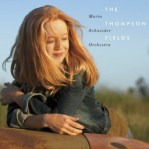 Grammy—Best Large Jazz Ensemble Album: Maria Schneider Orchestra, The Thompson Fields on Artistshare. Maria Schneider composed, arranged, and conducted the music on her album. This is beautiful music. Does it fall under a rigid category of jazz? Thanks to God, no. Too many jazz critics are purists, defining jazz by historical standards, not modern ones, and that is a serious mistake. The album is a paean to the pastoral, Midwestern world of her upbringing in Windom, Minnesota, in the southern part of the state, not far from where I once lived near Fairmont, Minnesota. Having lived in that area, I have a real sense of what a rich source of inspiration it is for the music in this album. The lush, tonally rich music in this album is at once moving and poetic, vibrant and, at times, highly impressionistic. Though Schneider’s music is certainly complex, there is an earthiness to her orchestrations that will yield to the patient listener nuances of sound and texture that are almost global in their sound textures. Listen to “Lembrança” (which is the Portuguese word for memory) and you’ll hear the tango sound of Gary Versace’s accordion. The rhythm is march-like at first, like a Brazilian Carnival parade. This is Schneider taking her experiences and emotions and molding them into beautiful orchestral jazz.
 Grammy—Best Arrangement, Instruments and Vocals: For Maria Schneider and David Bowie’s song “Sue (Or in a Season of Crime),” music by Maria Schneider Orchestra, lyrics by David Bowie, from Bowie’s 2014 compilation Nothing has changed on Parlophone. The song is seven-minute jazz experiment, and what makes it particularly interesting is that the song seems to have been stuck at the last minute into a Bowie greatest hits album, almost certainly condemning it forever to obscurity and it would have been had it been for earning a Grammy. Bowie’s voice is haunting and his lyrics cryptic. Schneider’s music is at times atonal with big brass sounds, free-jazz sax sounds, and strident, rapid drums, all a perfect complement to Bowie’s often tuneless voice and arcane lyrics:
Sue, I got the job
We’ll buy the house
You’ll need to rest
But now we’ll make it
Sue, the clinic called
The X-ray’s fine
I brought you home
I just said home
Sue, you said you wanted writ
“Sue the virgin” on your stone
For your grave
Why too dark to speak the words?
For I know that you have a son
Oh, folly, Sue
Ride the train, I’m far from home
In a season of crime, none need atone
I kissed your face1
Sue, I pushed you down beneath the weeds
Endless faith in hopeless deeds
I kissed your face
I touched your face
Sue, Good-bye
Sue, I found your note
That you wrote last night
It can’t be right
You went with him
Sue, I never dreamed
I’m such a fool
Right from the start
You went with that clown
Credits:
David Bowie, Maria Schneider, Paul Bateman, Bob Bhamra—Lyrics © PEER MUSIC
So what does the song “mean” you may ask? Well, frankly, I couldn’t tell you, but it really doesn’t matter since the lyrics, in my view, are nothing more than a vehicle by which Bowie is able to deliver a melody (or lack of one, depending on how willing you are to suspend disbelief and plunge the depths of atonality, search for a bit of melody here and there) that perfectly characterizes Schneider’s music, which he does brilliantly. This is truly amazing stuff, and stretches our understanding of how jazz will ultimately be defined. In some ways, “Sue” foretells the work to come two years later with the release of Blackstar, his final album before his untimely death January of this year, the same month the album was released.

Maria Schneider and David Bowie
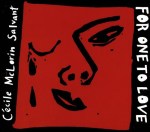 Grammy—Best Jazz Vocal Album: Cécile McLorin Salvant’s album For One to Love (2015) on Mack Avenue Records Cécile McLorin Salvant, vocals; Aaron Diehl, piano; Paul Sikivie, bass; Lawrence Leathers, drums.
The critics love Cecile McLorin Salvant, and for good reason; she is a brilliant, young jazz singer. But to say that she is simply a singer of jazz, while true, hardly characterizes the true nature of her crazy talent. Maybe a better characterization is that she is an effective “channeler” of great female jazz singers. How else can you explain such talent? Talent is talent; we can’t explain it. It just is. At the young age of 26 (born in Miami, Florida, 1989), she already has three exceptional jazz vocal albums to her credit: her 2010 debut album Cécile and the Jean-François Bonnel Paris Quintet (originally released in France after winning the 2010 Thelonious Monk International Jazz Vocals Competition); her Grammy-nominated 2013 album WomanChild (her U.S. debut album); and her 2015 album For One to Love. Her second album WomanChild puts her vocal and technical skills on display. Salvant has this incredible ability to effortlessly channel the lyrical styles of her idols—Billy Holiday, Sarah Vaughan, and Ella Fitzgerald—creating an emotional, and often stark, vocal atmosphere reminiscent of smoke-filled, lower Manhattan jazz clubs like Cafe Society in the 40’s. This is not by accident. At 18 Cécile moved to Aix-en-Provence, France, to study classical and baroque voice at the Darius Milhaud Conservatory. It was her teacher Jean-François Bonnel who steered Cécile in the direction of improvisation, picking up a vocal repertoire ranging from the 1910s on, which undoubtedly included studying her idols. Though steeped in the tradition of those great female jazz singers, Cécile brings a style and phrasing to her vocals all her own. And now with the release of For One to Love, she realizes all the possibilities of her vocal talents with a sound that is both hypnotic and emotionally resonant and, at times, provocative and sensual (see video example below). The themes of For One to Love center around the songs themselves—many of which are her own compositions—which on the surface seem nothing more than the ordinary expressions of romantic love, loss, melancholy, and sensuality. But in the singing of them, ordinary they are not. Judge for yourself in the video below where she sings “Look at Me”:
Of course, I’ve discovered watching her sing is part of the emotional experience of hearing her sing. She sounds like Sarah Vaughan here, yet not like her. The depths of her reach for a lyrical, emotional interpretation are stunning, and the results are very much her own. While the chills I feel from Cecile McLorin Salvant’s voice are different from those of Sarah Vaughan, they are certainly just as deep.
Here’s the playlist:
Maria Schneider “Lembrança” composed by Maria Schneider from The Thompson Fields on Artistshare — Maria Schneider Orchestra; Gary Versace – accordion; Scott Robinson, alto clarinet; Jay Anderson – bass; Frank Kimbrough – piano
David Bowie “Sue (or in a season of crime)” composed by David Bowie / Maria Schneider / Plastic Soul from Nothing has changed (2014) on Parlophone — Music composed, conducted and performed by the Maria Schneider Orchestra; David Bowie, vocals, and
Cecile McLorin Salvant “Left Over” composed by Cécile McLorin Salvant from For One to Love (2015) on Mack Avenue — Cécile McLorin Salvant, vocals; Aaron Diehl, piano; Paul Sikivie, bass; Lawrence Leathers, drums
Grammy—Best Improvised Jazz Solo:
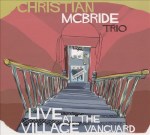 For “Cherokee” composed by Ray Noble and performed by the Christian McBride Trio from Live at the Village Vanguard (2014) on Mack Avenue — Christian McBride, bass, leader; Christian Sands, piano; and drummer Ulysses Owens. Well-deserved, without a doubt. This is hot jazz performed expertly without sacrificing the soul of jazz performance—improvisation. Jazz style of this music? Hard bop? Swing? Again, classifying McBride’s music is impossible because he doesn’t rely on ordinary conventions of hard bop. Yeah, there are amazing, bop-like runs, but there is also a kind of clarity in the sound that is very “modern,” which, in my view, makes it accessible (Hey, accessibility is not a bad thing; it earns Grammys and sells records and makes money!).
Grammy—Best Jazz Instrumental Album:
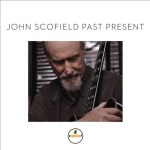 For John Scofield’s album Past Present (2015) on Impulse! “Slinky,” composed by Scofield, is the first of three tunes I played from this great record. Features John Scofield on both acoustic and amplified guitar; Joe Lavano, tenor; Larry Grenadier, bass; Bill Stewart, drums. Lavano’s horn adds a little heat at just the right time to cut the sweetness of Scofield’s improvisations. In “Slinky” the beat wants to stay in a funky, bluesy groove, but as soon as Lavano comes in with that rough-around-the-edges-smooth-in-the-middle tenor tone of his, their sound is straight-ahead, pre-fusion jazz.
Grammy—Best Contemporary Instrumental Album:
 For Snarky Puppy’s Sylva (2015) on Impulse! The selection I played is “Flight” composed by Michael League. The band, primarily, is composed of leader, bassist, composer Michael League with Cory Henry, organ; Justin Stanton, Rhodes piano; Chris Bullock, tenor; Robert “Sput” Searight, drums, and the Metropole Orkest. Snarky Puppy (Yes, and this is “snarky-style” jazz!) is a jazz-funk collective from Brooklyn unlike anything you’ve probably ever heard before. The album seems to be recorded as a single take, making song divisions begin and end abruptly if you’re listen to itunes digital downloads. My guess is that this is probably not the case on the CD.
Grammy—Best Instrumental Composition:
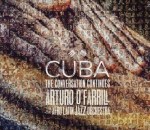 Awarded for Arturo O’Farrill’s composition “The Afro Latin Jazz Suite” (in four movements) composed by Arturo O’Farrill from his Cuba the Conversation (2015) album on motema music. In addition to the Arturo O’Farrill and his Afro-Latin Orchestra, alto saxophonist Rudresh Mahanthappa is featured soloist throughout the album. I played “The Afro Latin Jazz Suite Movement I: Mother Africa” which runs around 9:26.
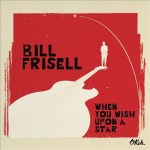 Bill Frisell “To Kill a Mockingbird, parts I & II,” composed by Elmer Bernstein from When You Wish Upon A Star on Okeh, featuring Bill Frisell, guitar; Eyvind Kang, viola; Thomas Morgan, bass; Rudy Royston, drums; Petra haden, voice. This is another strong record from guitarist Bill Frisell. Maybe even a great record. Though released to late for Grammy consideration (next year), I played the two cuts off the album as a tribute to the passing of American author Harper Lee, who wrote To Kill a Mockingbird, one of my top five all-time favorite books and a novel I taught every year for over twenty years. The music is Frisell’s interpretation of Elmer Berstein’s theme to the film version of To Kill a Mockingbird.
Grammy—Best Latin Jazz Album:
 Grammy went to the whiskey-throated Eliane Elias for her album Made in Brasil (2015) on Concord Jazz. I played “Brasil (Aquarela do Brasil)” composed by Ary Barroso, featuring Eliane Elias, vocals; Marcus Teixeira, guitar; Marc Johnson, bass; Marcel Mariano, electric bass; Edu Barata, drums. The album celebrates Elias’ Brazilian heritage with Bossa-Nova and standard jazz songs. Beautiful Brazilian music.
John Scofield “Mr. Puffy” composed by Scofield from Past Present (2015) on impulse! — John Scofield, guitar; Joe Lavano, tenor; Larry Grenadier, bass; Bill Stewart, drums
Maria Schneider “Walking by flashlight” composed by Maria Schneider from The Thompson Fields on Artistshare — Maria Schneider Orchestra; Gary Versace – accordion; Jay Anderson – bass; Frank Kimbrough – piano
John Scofield “Past Present” composed by John Scofield from Past Present (2015) on impulse! — John Scofield, guitar; Joe Lavano, tenor; Larry Grenadier, bass; Bill Stewart, drums
Christian McBride Trio “The lady in my life” composed by Rod Temperton from Live at the Village Vanguard (2014) on Mack Avenue — Christian McBride, bass, leader; Christian Sands, piano; and drummer Ulysses Owens
Cecile McLorin Salvant “Look at Me” composed by Salvant from For One to Love (2015) on Mack Avenue — Cécile McLorin Salvant, vocals; Aaron Diehl, piano; Paul Sikivie, bass; Lawrence Leathers, drums
Eliane Elias “No Tabuleiro da Baiana” composed by Ary Barroso from Made in Brasil (2015) on Concord Jazz — Eliane Elias, vocals, piano; Marcus Teixeira, guitar; Marc Johnson, bass; Marcel Mariano, electric bass; Edu Barata, drums
Arturo O’Farrill “The Afro Latin Jazz Suite, Movement II: All of the Americas” composed by O’Farrill from Cuba: The Conversation (2015) on motema music — Featuring Rudresh Mahanthappa, alto
 Phil Woods “I’ve Got about Everything,” from the album Phil Woods Quintet live at the Deer Head Inn. Listen to this and your life will be changed. Phil Woods, alto, leader; Brian Lynch, trumpet; Bill Mays, piano; Steve Gilmore, bass; Bill Goodwin, drums.
Here’s a really good video of the Phil Woods Quartet performing “Mitch” at The Deer Head Inn around 2012:
 Call and Response