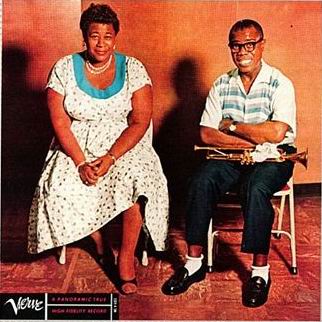
It’s all about jazz singers on tonight’s All That Jazz show.
Billie Holiday “St. Louis blues” composed by W.C.Handy from St. Louis blues (1940) on Okeh — Benny Carter And His All-Star Orchestra Bill Coleman (trumpet) Benny Morton (trombone) Benny Carter (alto saxophone, clarinet) Georgie Auld (tenor saxophone) Sonny White (piano) Ulysses Livingston (guitar) Wilson Myers (bass) Yank Porter (drums).
The orchestra swings a little harder than you would think. Carter’s Bopish riffs seem to reflect the Billie’s vocal direction. She sings so beautifully here. Gets really inside the lyrics.
Cassandra Wilson “Billie’s Blues” composed by Billie Holiday from Coming Forth by Day (2015) on Legacy Recordings.
Wilson’s spooky, eerie interpretation (thanks to Nick Cave) of Billie Holiday’s song. Just amazing.
Mose Allison “V-8 Ford Blues” composed by Willie Love from V-8 Ford Blues (1961) on Epic
Mose knows: he takes the basic blues rhythmic structure and just swings it, both vocally and on piano. And the lyrics: nothing like automotive innuendos.
Cecile McLoran Salvant “I Didn’t Know What Time it Was” composed by Lorenz Hart / Richard Rodgers from Woman Child (2013) on Mack Avenue
Salvant may be one of the best of the young, female jazz singers performing today. Woman Child is brilliant.
Charles Brown “Driftin Blues” composed by C. Brown from Driftin’ Blues on St. Clair
Brown’s hit swings with soul.
Al Hibbler “The Blues Came Falling Down” composed by Leroy Lovett from After the Lights Go Down Low (1956) on Atlantic — Hibbler on vocals with the Leroy Lovett Orchestra
Hibbler’s voice is deep and rich—
Nina Simone “Wild is the Wind” composed by Dimitri Tiomkin / Ned Washington from Ultimate (1966) on Phillips
One of my favorite Nina Simone songs: such much power and emotion in her voice.
Lil Armstrong and Her Swing Orchestra “Bluer than blue” composed by Lil Armstrong from Bluer than blue (1937) on decca
Lil wrote the song, sings it, and plays piano. That’s not Satchmo on the trumpet.
Connee Boswell and her Swing Band “Mama Don’t Allow It” composed by Connee Boswell from Sand in My Shoes (Digitally Remastered) (1936) on Red Sky Records
This recording is the only time Connee Boswell recorded under the name of Connee Boswell and Her Swing Band. She wrote the tune.
Hadda Brooks “Bully Wully Boogie” composed by Brooks from A Woman’s Place is In The Groove (1946) on ABM
Hadda is the greatest female boogie woogie style piano player. Man she is so good. Listen to that left hand!
Andy Bey “All the things you are” composed by Oscar Hammerstein II / Jerome Kern from Ain’t Necessarily So (2007) on 12th Street Records
Alex Henderson describes Bey as an unsung hero of jazz singing. Jazz singing has always been dominated by female singers. Bey’s talent gets me wondering if there are more unsung heroes out there.
Louis Armstrong and Ella Fitzgerald. “Tenderly” composed by Walter Gross / Jack Lawrence from Ella and Louis (1956) on Verve — Backed by a stellar quartet of Oscar Peterson (piano), Buddy Rich (drums), Herb Ellis (guitar) and Ray Brown (bass)
Jazz vocals are more often than not about the “standards,” and that is the problem. They’re over done. What separates the performances is how these standards are interpreted, and no one can interpret standards better than Ella and Louis, as this selection clearly shows.
Billy Eckstine “Mr. B’s blues” composed by Billy Eckstine from Everything I Have Is Yours / The Best of the MGM Years (1948) on Verve Records — This is from Billy Eckstine’s Bebop Orchestra recorded by MGM and features a valve trombone solo by Eckstine.
Eckstine’s voice clearly defines what the smooth, bluesy style of bebop can sound like behind a large orchestra. His trombone solo burns.
Jimmy Rushing “Rosalie” composed by Cole Porter from Rushing Lullabies/Little Jimmy Rushing and the Big Brass (1958) on Columbia — Featuring tenors Buddy Tate and Coleman Hawkins, trumpeter Buck Clayton, and trombonist Dicky Wells, organist Sir Charles Thompson, and pianist Ray Bryant, bassist Gene Ramey and drums, Jo Jones.
Mr. 5 x 5, king of the Oklahoma blues shouters, came up through the Blue Devils and spent almost 15 years as Basie’s vocalist. In his collection of essays Living with Music, fellow Oklahoman Ralph Ellison describes Rushing’s ability to dramatize “the lyrics in the musical phrase which charged the banal lines” of blues lyrics with the “mysterious potentiality of meaning which haunts the blues.”
Dee Dee Bridgewater “Compared to What” composed by Lassy “King” Massassy / Gene McDaniels from Red Earth: A Malian Journey (2007) on Universal — From Dee Dee Bridgewater’s astounding masterwork Red Earth: A Malian Journey is her ode to Mali and Africa, singing in the spirit that calls on her African and Malian ancestry.
Most people are familiar with the Les McCann and Eddie Harris version of “Compared to What.” But Bridgewater brings another dimension to the cynical lyrics of this song. She delves deeper into the source of the anger of the song, the disillusion and disenchantment with modern life, and renders it with a kind of celebratory quality.
Diana Krall “Wildflower” composed by Bob Dylan from Wallflower (2015) on Verve — Krall, piano and vocals.
Krall is an enormous talent. She takes a big risk, in my view, in putting out an album that pays homage to the pop songs of her youth. Her cover of the obscure—and quite beautiful—Dylan tune “Wildflowers” is a compelling vocal surprise.
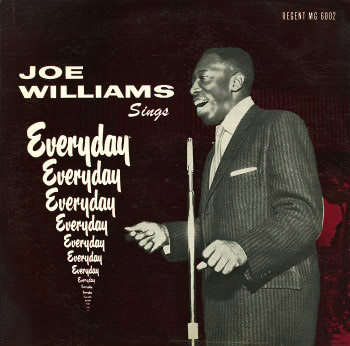 Joe Williams “Blow Mr. Low” composed by Red Saunders from Joe Williams Sings Everyday; originally recorded in Chicago in 1950 on Columbia — Red Saunders & his Orchestra : Hot Lips Page, Sonny Cohn, trum; Harlan “Booby” Floyd, John Avant, trombones; Riley Hampton, alto; Leon Washington, tenor; McKinley Easton, baritone; Earl Washington, piano; Jimmy Richardson, bass; Red Saunders, drums and leader.
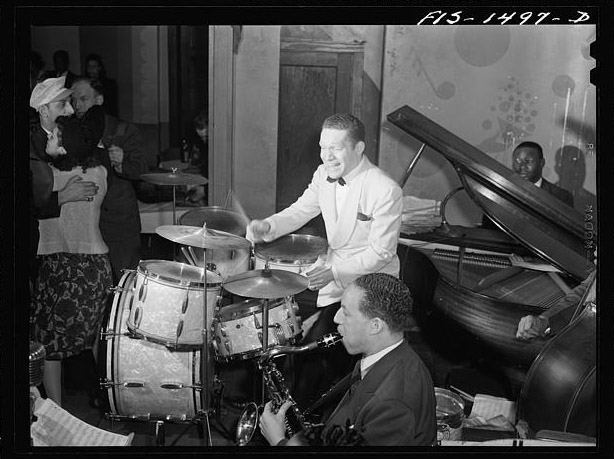
Williams is the consummate big band jazz singer. The song is a blues paen of sorts, singing the praises of the remarkable baritone saxophone player McKinley (Mac) Easton who has a phenomenal solo in the song. Easton played for years with the Red Saunders Orchestra. Pictured in the photo is Red Saunders on drums, Earl Washington on piano, and probably Leon Washington in the foreground on tenor. But it wasn’t until he joined the Count Basie band in 1954 that Williams hit the big time.
Peggy Lee “Why Don’t You Do Right (Get Me Some Money Too)” composed by Kansas Joe McCoy from Why Don’t You Do Right? (1946) on ASV — With the Benny Goodman Orchestra
June Christy “Shoo Fly Pie and Apple Pan Dowdy” composed by Gallop/Wood from I’m Thrilled (1945 – 1955) (1946) on Vsom — Stan Kenton and his orchestra;
Louis Jordan “Choo Choo Ch’ Boogie” composed by Denver Darling / Milt Gabler / Vaughn Horton from Jumpin’ Jive – Jump Blues Essentials (1946) on Hip-O
Louis Prima “Buona sera” composed by Peter DeRose / Carl Sigman from The Wildest! (1957) on Capitol
Sarah VaughanSarah Vaughan and Her All-Stars “Interlude (a night in tunisia)” composed by Gillespie from 1944-46 (1944) on Classics — Dizzy Gillespie (trumpet), Aaron Sachs (clarinet), Georgie Auld (tenor), Jack Lesberg (bass), Chuck Wayne (guitar), Leonard Feather (piano) and Morey Feld (drums)
International Sweethearts of Rhythm “Vi Vigor” composed by King from Women in Jazz (1946) on Stash — First all female swing orchestra and first integrated jazz band; features blistering hot tenor solo from Violet Burnside
Blanche Calloway & Her Band “Louisiana Liza” composed by Calloway from History of Jazz 1935 (1935) on Promo Sound Ltd — Vocalist, band leader, and older sister to Cab Callowy
Valaida (Valada) Snow “I Can’t Dance, I Got Ants in My Pants” composed by Clarence Williams from Harlem Comes to London (1935) on Disques Swing — Features Valaida Snow, Queen of the Trumpet, on vocals with the Billy Mason Orchestra
Dinah Washington “A slick chick (On the mellow side)” composed by Hadda Brooks from Slick Chick (On the Mellow Side) (1943) on EmArcy
Mel Torme “Moanin’” composed by Jon Hendricks / Bobby Timmons from Comin Home Baby (1962) on Rhino
Nat King Cole “(Get Your Kicks on) Route 66” from After Midnight: The Complete Session (Bonus Tracks) (1956) on Capitol
Sammy Davis Jr. “A stranger called the blues” from California Suite
Little Jimmy Scott “Please Give Me a Chance” from Great Scott! on Jasmine Records
 Call and Response
Reblogged this on .